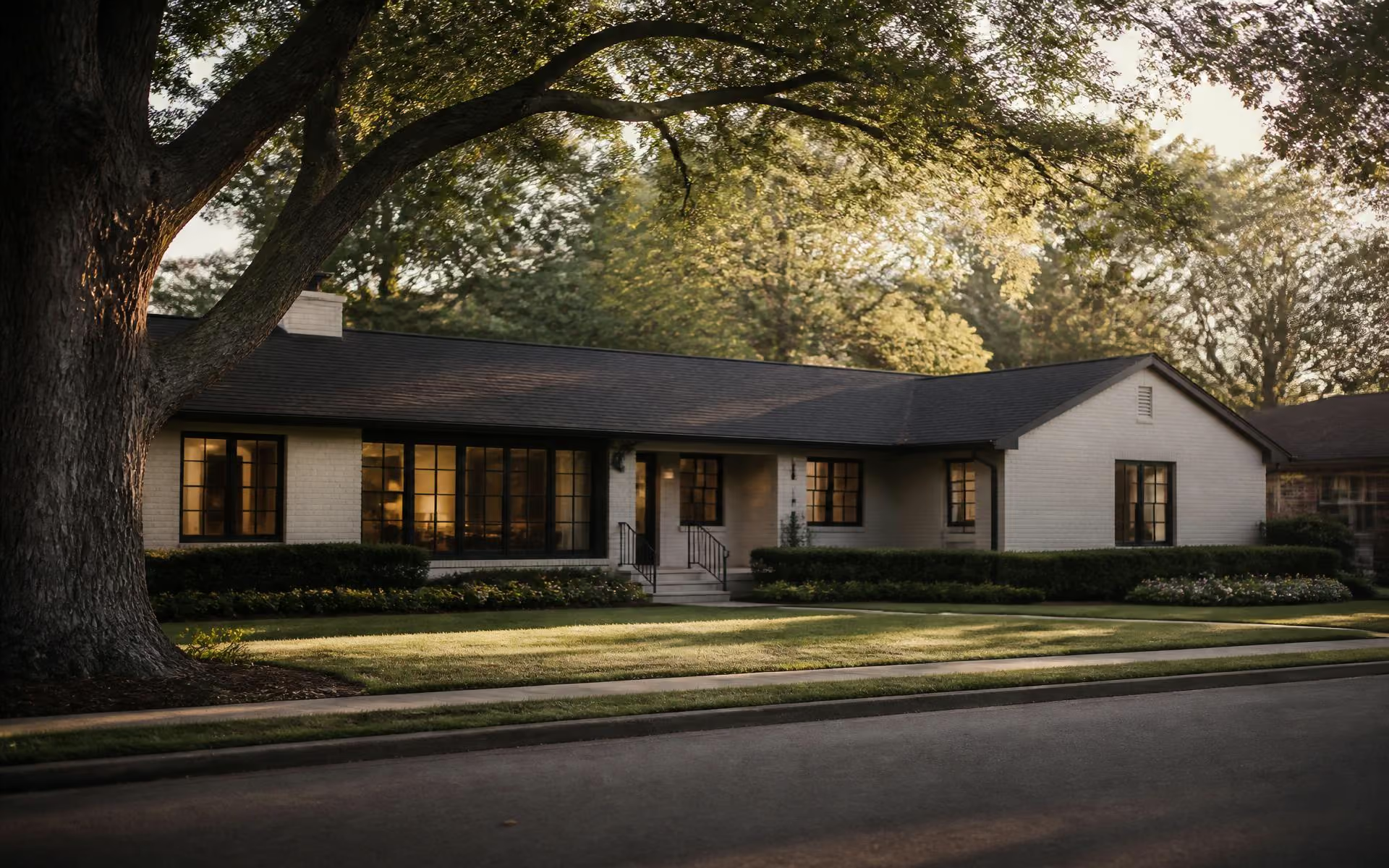
Mature willow oaks over a Cotswold street of mid-century brick houses in Charlotte

The Cotswold Journal · September 28, 2026

Why Cotswold Village Keeps Holding Its Tenants

On an ordinary Tuesday morning at Sharon Amity and Randolph Road, the Cotswold Village parking field operates with the steady, utilitarian rhythm that commercial landlords across Charlotte spend millions trying to engineer.

The Tuesday morning baseline

A reliable way to judge commercial real estate is to visit at ten on a Tuesday morning. Lifestyle centers that rely on discretionary evening dining or weekend apparel shopping look desolate at that hour. Cotswold Village, by contrast, operates with an unglamorous efficiency. Drivers pull in off Sharon Amity Road, park close to an entrance, run one deliberate errand, and leave within fifteen minutes.

The center avoids the performative architecture common in modern mixed-use developments. You find no central greens or decorative fountains taking up acreage. Instead, it offers surface parking with clear sightlines and easy curb cuts. For residents of the surrounding Cotswold neighborhood, the center functions less like an outing and more like an extension of the domestic pantry and service closet.

The logic of dual everyday anchors

Commercial retention begins with how often a tenant forces a customer to return. Cotswold Village succeeds because its major footprints belong to businesses people visit twice a week rather than twice a year. Having multiple national grocery options alongside routine pharmacy counters creates an indispensable baseline of foot traffic that insulates smaller storefronts from retail downturns.

When buyers look at Cotswold real estate, proximity to this crossroads consistently factors into their decision. Having multiple competing grocers within walking or short driving distance simplifies household logistics. The steady turnover of grocery carts ensures that adjoining specialty spaces enjoy constant visibility, giving smaller merchants a captive audience that requires minimal marketing expenditure to attract.

An inelastic service layer

Beyond food, the tenant roll at Cotswold Village leans heavily into physical services that e-commerce cannot replace. Dry cleaners, pet supplies, fitness spaces, banks, and personal grooming concepts fill the interstitial spaces. These are destination visits driven by weekly necessity rather than impulse spending, keeping the center viable across varied economic cycles.

Independent operators benefit directly from this tenant mix. A local sandwich counter or framing shop does not have to generate all of its own customer momentum. It catches the parent picking up a prescription, the remote worker grabbing lunch after a workout, or the homeowner running hardware errands before heading back into 28211.

Cross-traffic from adjacent neighborhoods

The crossroads at Sharon Amity and Randolph Road captures traffic from well beyond immediate Cotswold Charlotte streets. Commuters traveling between SouthPark and Uptown Charlotte cross paths with residents arriving from Myers Park, Eastover, and Sherwood Forest. To the east, neighbors from Oakhurst find it their most direct connection to comprehensive retail services.

This positioning draws a diverse customer demographic across morning, afternoon, and evening hours. Retirees from long-standing brick ranches visit early, professionals pass through at midday, and young families arrive in the late afternoon. This staggered schedule keeps parking turnover balanced throughout the day, preventing the bottlenecks that plague single-focus entertainment districts.

Commercial stability and property equity

For prospective homeowners evaluating mid-century ranches or new builds in the area, the durability of Cotswold Village provides quiet reassurance. Retail vacancies and rapid commercial turnover can depress perception and convenience across an entire ZIP code. Cotswold has avoided this pattern by keeping its core offering anchored in daily household requirements.

A neighborhood commercial core that stays full signals sustained local purchasing power and municipal stability. While commercial lease rates and tenant longevity are subject to broader market conditions that buyers should verify independently, the historical persistence of this corner remains a pillar of local residential confidence four miles from Charlotte's core.

Published September 28, 2026 by Discover Cotswold. Editorial commentary about the Cotswold area of Charlotte, North Carolina. Figures and conditions change — verify anything you intend to rely on with the responsible authority.

Common Questions

Questions this raises

What makes Cotswold Village different from newer Charlotte developments?

Cotswold Village focuses entirely on functional convenience rather than curated entertainment. It prioritizes surface parking, direct access, dual grocers, and everyday service providers, ensuring consistent weekly visits from local residents instead of depending purely on discretionary evening and weekend foot traffic.

Source: Charlotte's Got a Lot — official visitor guide

Does Cotswold Village impact nearby Cotswold real estate values?

Yes. Established, fully leased neighborhood retail provides long-term daily convenience, which supports residential demand. Proximity to reliable grocery, medical, and service destinations makes the mid-century homes and renovations in ZIP code 28211 consistently attractive to prospective buyers.

Source: City of Charlotte

Is Cotswold Village safely walkable from surrounding residential streets?

Walkability depends on your specific street. Interior Cotswold streets feature quiet, tree-lined walking environments, but crossing major corridors like Randolph Road or Sharon Amity Road requires using designated pedestrian signals. Sidewalk connectivity continues to improve throughout the surrounding corridors.

Source: NC Department of Transportation project information