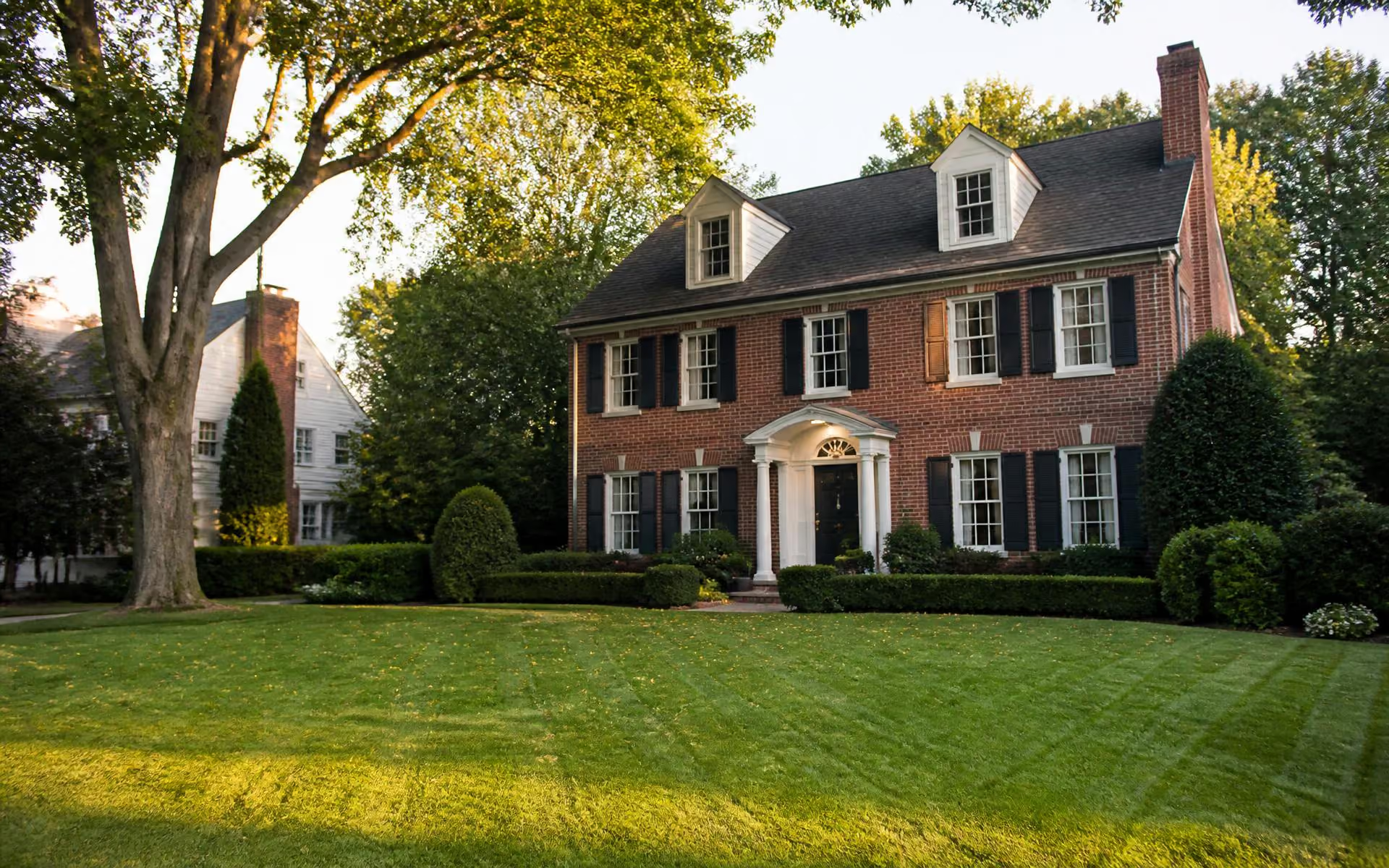
Cotswold is not one market. It is an original 1950s and 1960s housing stock in the middle of a twenty-year renovation and replacement cycle, which means a single street can hold an untouched ranch, a thoughtful whole-house remodel, and a brand-new five-bedroom custom home. Understanding which of those three you are buying — and which one the comp down the street actually was — is the entire game here.
Three markets on one street
The fastest way to misprice a Cotswold home is to treat it as a single submarket. In practice there are three overlapping products:
- Original condition. A 1,500 to 2,000 square foot brick ranch with its original kitchen, single bath configuration, and 1960s systems. These trade primarily on lot value and location, and buyers are usually either renovators or builders.
- Renovated original. The same shell with an opened kitchen, added primary suite, updated mechanicals, and often a rear addition. This is the deepest part of the market and where most owner-occupant demand concentrates.
- Infill new construction. A replacement house, frequently 3,500 to 5,500 square feet, built to current expectations on a lot that was assembled for its position rather than its house. These set the top of the street and pull the whole block up over time.
When you see a wide spread in reported Cotswold sale prices, you are almost never looking at market volatility. You are looking at three different products averaged together.
Why lots matter more here than almost anywhere in-town
Charlotte's older in-town neighborhoods are frequently hilly, narrow, creek-constrained, or heavily encumbered by mature tree canopy in ways that complicate building. Cotswold's subdivisions were platted flat and wide. That geometry means a larger buildable envelope, a simpler foundation, easier side-yard access, and genuinely usable back yards — the reasons builders keep returning.
Confirm the specifics rather than assuming them. Pull the parcel on Mecklenburg County's POLARIS viewer for dimensions, zoning, and easements, and check the current Charlotte Unified Development Ordinance for setbacks, height, and lot-coverage limits before you underwrite an addition or a replacement.
Inventory: small by construction
Cotswold is finished. There is no undeveloped land of consequence, no phase two, and no builder release schedule. Supply comes from two places only: owners moving on, and builders acquiring lots. Combined with long average tenure — many of these homes have changed hands two or three times in seventy years — that produces a market where the number of genuinely comparable homes available in any given month can be counted on one hand.
The practical consequences: pre-approval and proof of funds should be current before you start looking, diligence periods are negotiated aggressively, and awareness of homes coming to market before they list has real value. That last point is the main argument for local representation over a national portal.
Taxes and assessed value
Cotswold pays the same combined Mecklenburg County and City of Charlotte rate structure as the rest of the city. What has changed materially is assessed value: revaluation cycles have moved values substantially across southeast Charlotte, and a home purchased before the most recent revaluation may carry a very different bill than a comparable recent sale. Never underwrite a Cotswold purchase from the seller's current tax bill — pull the parcel's assessed value and tax record and model forward.
Renovate, replace, or buy finished
All three strategies work in Cotswold, and the right one is mostly a function of your timeline and your tolerance for construction risk.
- Buy finished. Highest price per square foot, zero schedule risk, no permitting exposure. The right answer for most relocating families.
- Renovate. Best control over layout and finish, real potential to create value, but exposed to permitting timelines, contractor availability, and material pricing. Requires a builder's opinion before, not after, you go under contract.
- Replace. Cleanest result, highest capital requirement, and the most regulatory diligence — zoning, tree ordinance, stormwater, and any recorded covenants all have to clear before the math is real.
Our custom homes and renovations page walks through the permitting sequence and the questions to ask a builder before you commit, and architecture covers what tends to work visually on these streets.
How to compare Cotswold to its neighbors
Buyers looking at Cotswold are usually also looking at Myers Park, Elizabeth, Foxcroft, Sedgefield, or Plaza Midwood. Each trade-off is different — prestige, walkability, housing age, school assignment, and price per foot all move independently. We break those comparisons down honestly on Cotswold vs. the alternatives, with deeper head-to-heads on Cotswold vs. Myers Park, Cotswold vs. SouthPark, and Cotswold vs. Elizabeth.
If you are trying to price a specific house rather than the neighborhood, start with Cotswold home values for the condition tiers, and Cotswold luxury homes for the new-build end of the market.
Nothing on this page is real estate, appraisal, tax, or investment advice, and it is not an offer to sell or a solicitation to buy any property. Verify all figures independently. Equal Housing Opportunity.