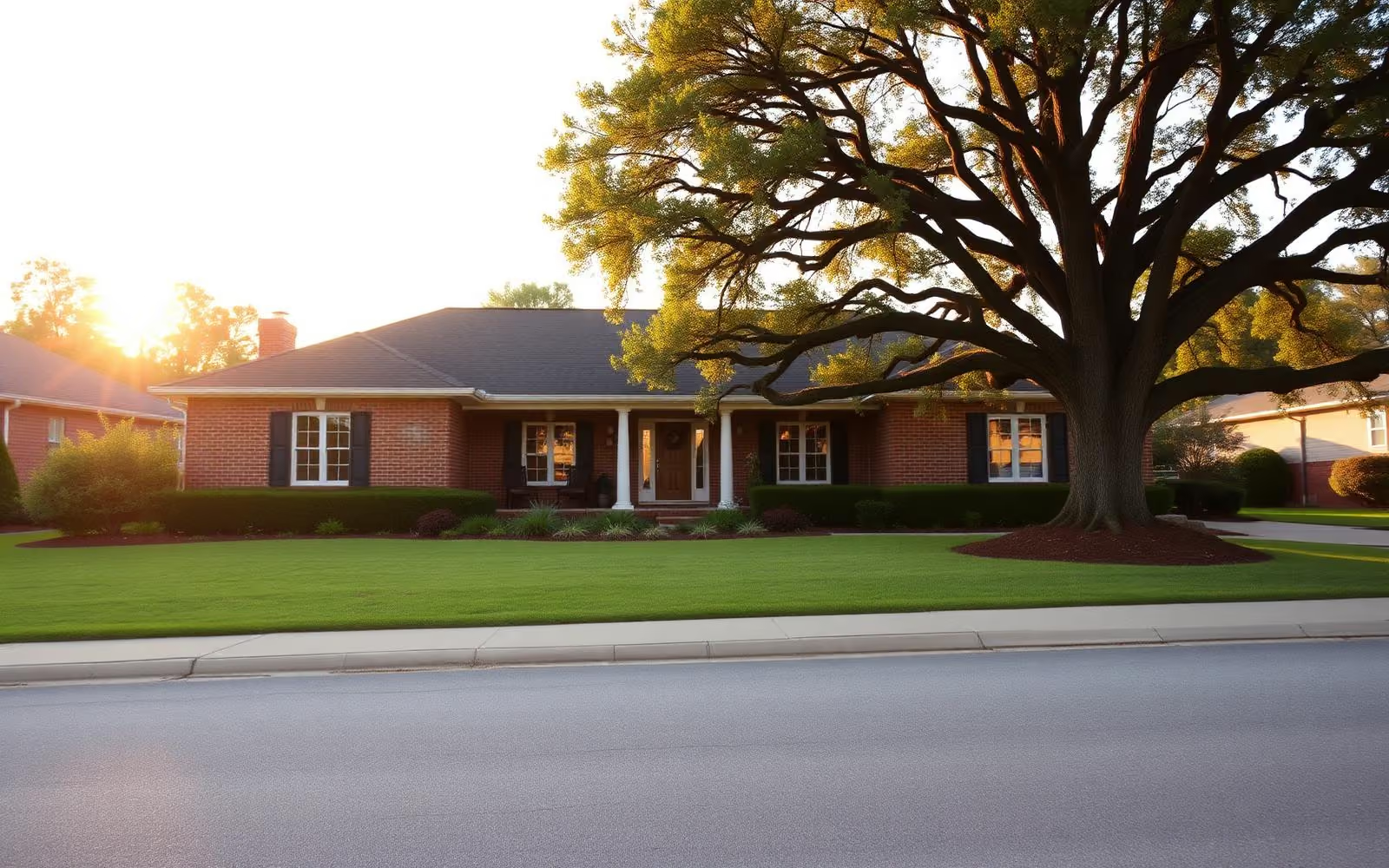
A renovated brick ranch home with fresh landscaping on a Cotswold street in Charlotte NC

Real Estate

Cotswold home values, tier by tier

Why the neighborhood median is the least useful number in Cotswold — and what to read instead.

Valuing a Cotswold home means answering one question first: which of the neighborhood's three products is it? An original mid-century ranch, a renovated original, and a new infill custom home all sit on the same blocks in 28211, and they trade in materially different bands. Once you place a house in the right tier, lot geometry and block position do most of the remaining work.

The three value tiers

Every credible Cotswold valuation starts by sorting the subject house into one of three groups, then comparing only within that group.

  1. Original condition. Roughly 1,400 to 2,400 square feet, original kitchen and bath configuration, systems at or past end of life. Buyers are usually renovators or builders, and pricing tracks lot value plus salvageable structure rather than finished comps.
  2. Renovated original. The same shell with an opened kitchen, added or relocated primary suite, updated mechanicals, and frequently a rear addition. This is the deepest and most liquid part of the market, and where owner-occupant demand concentrates.
  3. Infill new construction. A replacement house, commonly 3,500 to 5,500 square feet, built to current expectations. These set the ceiling on a block and lift surrounding assessed values over time.

Why price per square foot misleads here

Price per square foot compresses three variables — condition, lot, and layout — into one number, and in a mixed-vintage neighborhood that produces nonsense. A 1,600 square foot original ranch on a wide corner lot and a 1,600 square foot renovated ranch mid-block can show the same figure while representing completely different purchases. Use it to sanity check a range, never to set a price.

What the lot contributes

Cotswold's subdivisions were platted flat and wide, which is unusual for in-town Charlotte and is the single biggest reason builders keep returning. Lot depth, frontage, tree placement, floodplain proximity, and buildable envelope under the current Unified Development Ordinance all feed directly into what a replacement house can be — and therefore into what the land is worth to a builder. Pull the parcel on POLARIS before you form a view.

How to read a Cotswold comp

  • Confirm which tier the comp belongs to before anything else.
  • Check whether square footage came from an addition, and whether it is above or below grade.
  • Compare lot width and depth, not just acreage.
  • Note distance to an arterial — Randolph, Sharon Amity, Wendover, Monroe all carry real volume.
  • Look at sale date against the rate environment, not just the calendar year.

Carrying cost is part of value

Two houses at the same price can carry very differently once tax assessment, insurance, and the efficiency of an original envelope are included. Our property taxes and carrying costs page walks through the real monthly number, and cost of living puts it against the rest of a household budget. If you are weighing a renovation to create value, the sequence is set out on renovating a Cotswold ranch.

Nothing on this page is an appraisal, a valuation, or real estate, tax, or investment advice, and it is not an offer to sell or a solicitation to buy any property. Verify all figures independently. Equal Housing Opportunity.
Common Questions

Cotswold home values — the questions buyers ask

How much are homes worth in Cotswold, Charlotte NC?

There is no single Cotswold number, because three products trade on the same street: an original 1950s or 1960s brick ranch, a renovated version of that same house, and a new infill custom home. The spread between the bottom and the top of that range is wide enough that a neighborhood median tells you almost nothing about a specific address. Value here is set by condition tier, lot dimensions, and block position — in that order. Canopy MLS publishes current market statistics for southeast Charlotte, and the Mecklenburg County assessor publishes the parcel record for any specific home.

Source: Mecklenburg County POLARIS 3G parcel viewer

Are Cotswold home values going up?

Long-run direction across southeast Charlotte has been upward, driven by the rebuild cycle: each renovation or replacement raises the ceiling on its block and pulls surrounding assessed values with it. Short-run direction depends on interest rates and inventory, both of which move faster than any neighborhood guide can track. Use Canopy MLS reporting for the current month rather than a figure from an article.

Source: City of Charlotte Unified Development Ordinance (2023)

What adds the most value to a Cotswold home?

In practice: a primary suite on the main level, a kitchen opened to the living space, a fourth bedroom, and mechanical systems with documented age. Cosmetic finish matters less than layout, because buyers here are comparing against houses that have already solved the layout problem. Overbuilding relative to the block is the most common way to lose money.

Source: City of Charlotte

Does an unrenovated ranch in Cotswold sell for lot value?

Frequently, yes — an original house on a wide, flat, well-positioned lot is often priced against what a builder or renovator will pay for the land and the shell rather than against renovated comps. That is why two houses of identical size on the same street can trade far apart.

Source: City of Charlotte

How does Mecklenburg County revaluation affect Cotswold values?

Revaluation resets assessed value, which changes the tax bill but does not itself change market value. The practical trap is underwriting a purchase from a prior owner's tax bill: after a revaluation or a major renovation, that figure can be badly out of date. Pull the current parcel record before you model carrying costs.

Source: Mecklenburg County POLARIS 3G parcel viewer

Is Cotswold a good investment compared to Myers Park or SouthPark?

Cotswold's argument is entry price relative to location: it shares much of the in-town access of more expensive neighborhoods at a lower cost per foot, and the active rebuild cycle keeps upward pressure on the ceiling. That is a general observation about the market, not a forecast or investment advice — verify current figures and speak to a licensed professional before relying on any of it.

Source: NC Licensing Board for General Contractors

Sources & Verification

How this page was researched

Figures on this page are compiled from public records and primary sources listed below. Conditions change; verify anything you plan to rely on directly with the responsible authority.

Last editorial review: