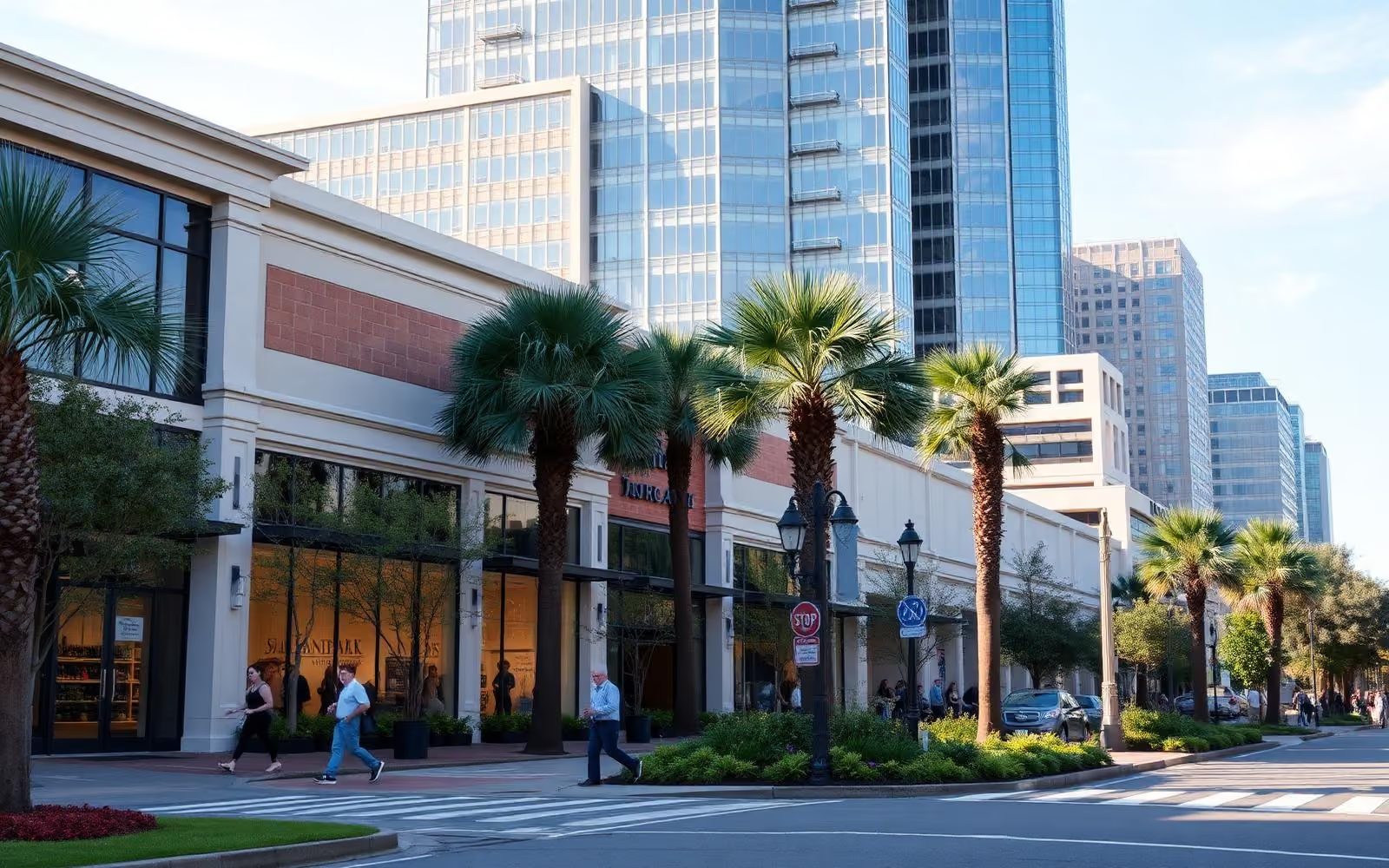
Cotswold and SouthPark end up on the same shortlist because both offer in-town convenience without a highway commute. The similarity ends there. SouthPark is Charlotte's second downtown — mid-rise offices, a regional mall, and a dense, still-densifying core. Cotswold is a post-war residential neighborhood with a full-service shopping centre in the middle of it. The decision is really about how much activity you want outside your front door.
What each place actually is
SouthPark grew around a regional mall into Charlotte's second employment and retail centre. Its housing spans high-rise and mid-rise condominiums, dense new townhomes, apartment communities, and established single-family streets in the pockets behind the commercial core. Activity is the product.
Cotswold was platted as post-war single-family subdivisions around a mid-century shopping centre at Randolph and Sharon Amity. The retail serves the neighborhood rather than the region, and the interior streets are quiet. Housing is almost entirely detached single-family, in the three condition tiers set out on Cotswold home values.
Convenience, compared properly
- Shopping. SouthPark has the depth — national and luxury retail at scale. Cotswold has the frequency — grocery, pharmacy, hardware, and dry cleaning at the centre of the neighborhood. See shopping in Cotswold.
- Dining. SouthPark carries more destination restaurants; Cotswold and the Monroe Road corridor carry more weeknight ones. See Cotswold restaurants.
- Recreation. Cotswold's Briar Creek Greenway access is the clearer advantage for daily use — see parks and greenways.
- Commuting. Cotswold reaches Uptown and the Randolph Road medical corridor faster; SouthPark reaches the southern suburbs faster. Details on getting around from Cotswold.
Density and traffic
This is the deciding factor for most households. SouthPark's ongoing redevelopment adds residents, offices, and vehicle trips to a core that was not laid out for them, and peak congestion reflects that. Cotswold's arterials get busy — Randolph, Sharon Amity, Wendover, and Monroe all carry volume — but its residential interior does not. Verify current and planned development with the City of Charlotte rather than assuming today's conditions persist.
Housing and price
SouthPark's range is wider at both ends: entry-level condominiums exist, and so do very large houses in its established single-family pockets. Cotswold is narrower in product and generally more accessible at the single-family entry point, with the rebuild cycle setting the ceiling. If you want new construction specifically, both neighborhoods offer it — see Cotswold luxury homes and new construction and teardowns.
Who should choose which
Choose SouthPark if you want walkable upscale retail and dining, a lower-maintenance attached home, or a short commute to a SouthPark office.
Choose Cotswold if you want a detached house on a flat lot, a quiet street, errands close by, and a faster route to Uptown. The wider comparison set is on Cotswold vs. the alternatives, with the period-housing trade-off covered on Cotswold vs. Myers Park.
Comparisons on this page are editorial and general. Nothing here is real estate, appraisal, or investment advice. Verify pricing, development plans, and school assignment independently. Equal Housing Opportunity.